Mindfulness Journal Prompts to Use With Coaching Clients
Mindfulness journal prompts can help clients notice a moment without judging it. Use these questions to choose a clear focus for reflection between sessions.
By The Mindfulness Coaching Kit by Cosmo Suite · Editorial policy
Published · 8 min read

Mindfulness journal prompts work best when they help a client notice one ordinary moment in their own words. A coach can choose a question that fits the session goal and make it easy for the client to adapt or decline it.
Mindfulness is commonly described as awareness of internal states and surroundings. The American Psychological Association describes it as noticing thoughts, emotions, and present experiences without judging or reacting to them. A journal question can invite that kind of noticing; it does not predict a particular result. Treat the prompts below as optional reflection starters. They do not assess progress or provide treatment.
Mindfulness journaling is writing about a present experience with attention to what the person notices. A coaching prompt is a question selected to support a conversation about the client's own goal. Between-session reflection is an optional activity the client agrees to try outside a session.
If you're choosing a worksheet as well as a prompt, start with this guide to selecting mindfulness coaching worksheets. It compares formats by the kind of reflection they support.
Key takeaways
- Choose one question that matches what the client wants to notice.
- Ask about a specific moment, thought, sensation, or choice. Avoid telling the client what their answer means.
- Let the client adapt the prompt, choose another format, or pass.
- Treat journaling as an optional coaching reflection, not a mental health treatment or a promise of results.
Mindfulness journal prompts by session goal: what to use when
Choose a prompt by what the client wants to notice. Keep it specific enough to begin, but open enough that the client can answer in their own way.
| Session focus | Prompt to try | Use it when |
|---|---|---|
| Arriving in the present | “What do you notice around you right now, and what do you notice within you?” | The client wants a simple observation before exploring a topic. |
| Naming an experience | “What feeling, thought, or body sensation has been easiest to notice today?” | The client is sorting through a busy or mixed experience. |
| Practicing a pause | “When did you notice a moment to pause this week? What was happening just before it?” | The client wants to reflect on a specific moment, without judging how they responded. |
| Exploring a choice | “What did you notice before you made that choice, and what mattered to you then?” | A decision is relevant to the client's stated coaching goal. |
| Looking back gently | “What would you like to remember about this moment, without needing to fix or explain it?” | The client wants a low-pressure way to close a reflection. |
If a client wants a page to guide a longer written reflection, a mindfulness coaching worksheet collection can provide a prepared structure to adapt together.
Choose one prompt at a time. If a question feels too broad, narrow its time frame or focus. If it feels too personal, let the client choose another one.
15 mindfulness journal prompts to adapt
The prompts below are grouped by the kind of noticing they invite. Offer one at a time, and tell the client they can change the wording, write a few words, draw, or pass.
Notice the present moment
These questions direct attention to what is happening now. They do not require the client to feel calm or to clear their mind.
- What can you notice through your senses in this moment?
- Which sound, color, texture, or physical sensation caught your attention today?
- What changes when you pause long enough to describe this moment in plain words?
- What is one thing you noticed only after slowing down?
Name thoughts and feelings with care
These questions invite description. A client might write “I notice worry before the meeting” and leave its meaning open.
- What thought has returned more than once today?
- What feeling can you name right now, even if it is only a small part of the picture?
- Where do you notice that feeling in your body, if anywhere?
- What would you call this experience if you used neutral, simple language?
The American Psychological Association's description of mindfulness is a useful boundary for wording prompts: ask what the client notices, rather than telling them what a sensation means or what they should feel.
Reflect on a pause or choice
These questions look at a particular moment the client chooses. Avoid framing a response as success or failure.
- What was happening just before you noticed a pause?
- What options did you see in that moment?
- What mattered most to you as you chose what to do next?
- What did you notice after the choice, without rating it as right or wrong?
Close with a manageable reflection
An ending prompt can help a client decide what they want to carry into the rest of the day. Keep it grounded in their own priorities.
- What do you want to remember from this reflection?
- Is there one small question you want to keep noticing this week?
- What would help this reflection feel complete for now?

How to choose one prompt for a coaching session
Start with the client's language. If they want to notice what happens before a difficult conversation, choose a prompt about that moment. A broad question such as “What did you learn about yourself?” can steer the client toward a conclusion they did not ask for.
When the client prefers to write on a page rather than respond aloud, a prepared reflection worksheet for mindfulness coaching can offer a clear place to begin while leaving the wording open to them.
Then check the scope. A coaching prompt can support reflection on goals, choices, and patterns the client wants to discuss. It should not diagnose a condition, invite trauma processing, or imply that journaling will treat a health concern. The National Center for Complementary and Integrative Health notes that mindfulness research covers varied practices and that findings can be difficult to interpret; the evidence does not justify promising a particular outcome from a journal prompt.
Offer a clear choice. You might say, “Would you like to write about this, talk it through, or leave it for now?” That gives the client control over the format and the level of detail. If they write, avoid requiring them to share the full entry. Agree in advance what, if anything, they want to bring back to a session.
When the first prompt does not fit
Listen to how the client responds before you offer another question. If a client says, “I keep agreeing before I know what I want,” a prompt about the moment before answering may fit their goal. If describing a feeling is difficult, they could instead notice what they saw or heard around that moment. If writing feels like too much, talk through the question or leave it for another time. These choices keep the exercise connected to the client's words instead of the coach's guess about what the client needs.
Before suggesting a journal between sessions, explain how you will use any notes the client chooses to share. Let them keep the entry private if they prefer. Agree on what comes back to the next session, and do not ask for a copy of the full journal by default. This makes the activity easier to adapt while keeping the client's control clear.
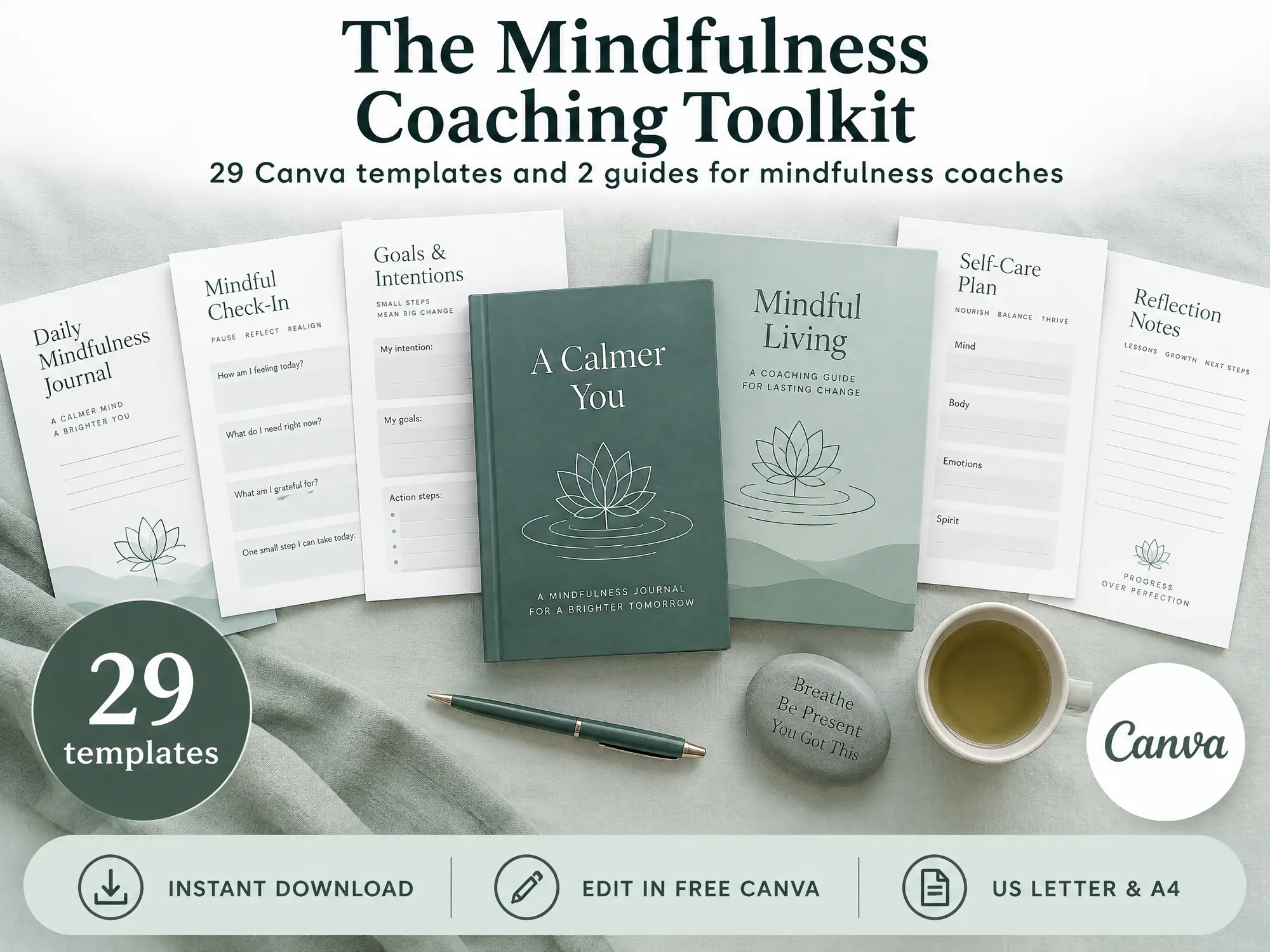
For a more structured way to match a reflection activity to a session purpose, use a mindfulness coaching worksheet format that fits the client's goal. The Mindfulness Coaching Kit offers worksheet resources for coaches; choose only a format that matches the work you actually do.
A simple between-session journaling routine
Keep the routine small enough that it does not become another assignment the client feels they have failed. Agree on four details together:
- The focus: Name one situation or moment the client wants to notice.
- The prompt: Select one question, or let the client rewrite it in their own words.
- The format: Choose a notebook, a few typed words, or a spoken reflection in the next session.
- The boundary: Decide whether the client will share anything, and make clear that they can skip the exercise.
An illustrative example: a client wants to pay attention to what happens before they agree to a request. The coach and client choose, “What did you notice just before you answered?” The client can jot down a short observation after a relevant moment. At the next session, the coach asks whether the client wants to discuss it. The example is a planning illustration, not a client case or a claim about results.
Keep the routine small. If the client does not write, ask whether the prompt, timing, or format needs to change. They may prefer to notice the moment and talk about it later. A ready-to-use mindfulness coaching worksheet collection can help when you want a prepared structure, while leaving room to adapt the activity to the client.

Keep journaling within a coach's role
Be explicit that journaling is optional and that a client can stop at any time. Some topics may bring up difficult feelings. Do not press for more detail or promise that a prompt will resolve distress. Ask what kind of support the client wants and follow your professional boundaries if the concern falls outside coaching.
Research findings should not be stretched into promises about coaching prompts. A systematic review and meta-analysis examined a limited set of randomized trials using expressive writing or gratitude journaling for mental health concerns. Its authors noted substantial variation across studies and difficulty drawing robust conclusions. Those findings do not establish that these coaching prompts improve mental health, and this article makes no such claim.
Mindfulness journal prompts can still be useful as conversation tools: they help a coach offer a clear question and give a client room to decide what they want to notice. Keep the choice with the client, stay close to their stated goal, and let the reflection be complete when they say it is.
The Mindfulness Coaching Kit for worksheet structure
When you want more structure than a single question, The Mindfulness Coaching Kit's reflection resources give you a starting point for choosing materials for a coaching session. Match the worksheet to the client's stated goal and adapt it together; Use the prepared page to guide the conversation, then adapt it with the client. Learn about The Mindfulness Coaching Kit and the site's focus on mindfulness coaching resources.
How we put this together: This guide uses the American Psychological Association's description of mindfulness and a published review of journaling research to set careful boundaries around claims. The prompt examples are original planning aids, not clinical recommendations or reported client outcomes. The Mindfulness Coaching Kit is affiliated with this site, and its materials are intended for coaching use. Editorial note: We checked the cited source pages on November 3, 2026.
Frequently asked questions
What are mindfulness journal prompts?
They are open questions that invite someone to notice present-moment thoughts, feelings, sensations, or surroundings without treating one answer as correct.
How many prompts should I give a coaching client?
Start with one clear question. Offer another only when it follows naturally from what the client wants to explore.
Should a client write every day?
There is no single schedule that fits every coaching relationship. Agree on a pace that feels useful and manageable to the client.
Can mindfulness journaling replace therapy?
No. A coaching journal prompt is a reflection aid, not mental health care or a substitute for a qualified health professional.
What if a prompt feels uncomfortable?
Let the client skip it, change it, or stop writing. Do not press for disclosure; discuss appropriate support if the client raises a concern beyond your coaching role.
Do clients need a special journal?
No. A notebook or another format the client prefers can work. The question and the client's choice matter more than the stationery.