Choosing Mindfulness Coaching Worksheets: A Practical Guide
Mindfulness coaching worksheets can support focused reflection between sessions. Compare common formats, choose a useful prompt, and prepare it with care.
By The Mindfulness Coaching Kit by Cosmo Suite · Editorial policy
Published · 7 min read
Mindfulness coaching worksheets can help a client bring a reflection into a session or carry a question between meetings. Choosing a page that fits the conversation takes care. Too many prompts can make reflection feel like homework. A vague prompt can leave someone unsure where to start.
Choose a page by its job: notice an experience, explore a response, or review what the client learned. You should be able to explain the task in a sentence. This guide compares common formats, walks through a selection process, and shows how to introduce a page within a coaching relationship.
Short answer: choose one worksheet for one client goal, keep the prompts optional, and agree how the client wants to use or share the page.
What is a mindfulness coaching worksheet for?
A mindfulness coaching worksheet gives a client a structure for noticing and reflecting on an experience. It can help make a conversation more concrete, as long as the client understands why they are using it and has a choice about what to share.
“Mindfulness” covers many practices. The National Center for Complementary and Integrative Health (NCCIH) describes it as attention to the present moment without judgment. A worksheet can invite that kind of noticing. What someone feels or discovers is up to them; the page simply offers a prompt.
Before choosing a page, name the moment it should support. Is the client preparing for a session, reflecting after a difficult conversation, or noticing what helps them return their attention to the present? If the purpose is hard to explain, the worksheet probably needs a narrower focus.
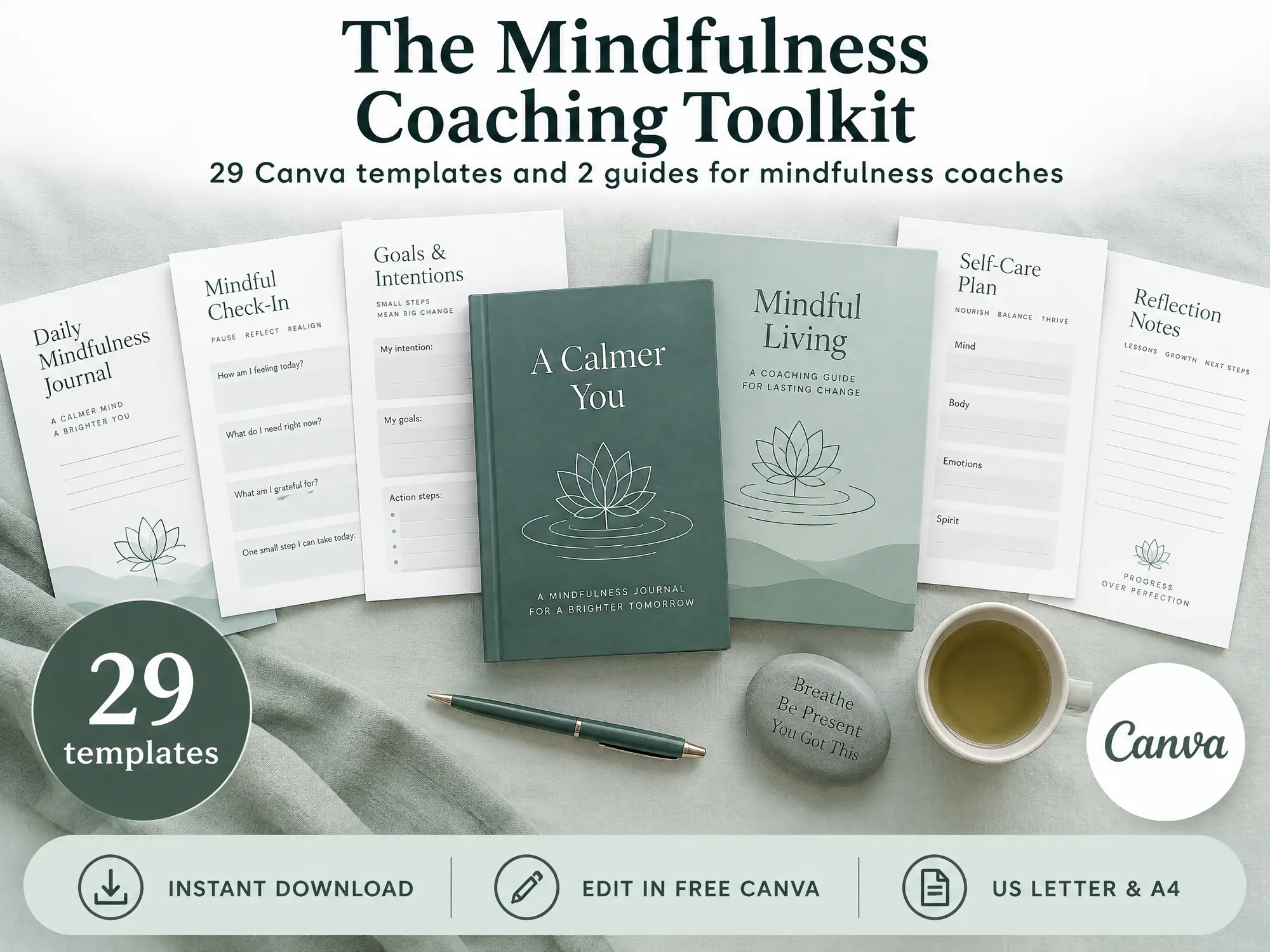
For a broader look at the resources available to coaches, see The Mindfulness Coaching Kit, which includes guided journals and worksheets among its Canva templates.
Which worksheet format fits the task?
Use a format that matches the reflection you want to invite. The table below is a planning aid; it does not describe a validated ranking of worksheet types.
| Format | Useful when the client wants to… | Prompt direction | Watch for |
|---|---|---|---|
| Present-moment noticing | Pause and describe an experience | “What do you notice right now?” | Avoid implying there is a correct answer |
| Reflection journal | Revisit a moment between sessions | “What stood out, and what matters to you about it?” | Keep the page open enough for the client's own meaning |
| Values or intention check-in | Connect a choice with a stated priority | “What did you want to make room for?” | Do not assign values on the client's behalf |
| Gratitude or appreciation page | Record something the client chose to appreciate | “What felt worth noticing today?” | Let the client decline the exercise if it feels forced |
| Session review | Carry a learning or question into the next meeting | “What would you like to return to?” | Avoid turning the page into a progress score |
You do not need a worksheet in every session. A spoken question may be enough. Choose paper or a digital page based on the client's preference, access, and privacy needs. The NIH mindfulness guide describes mindfulness in ordinary activities as well as seated practice. A printed page is one way to reflect.
How do you choose a worksheet for one client?
Start with the client's own goal for the conversation. Then decide whether writing will help them reflect, organize a thought, or remember a question for later. A page should earn its place by making that task clearer.
Try this short selection process:
- Name the moment. Describe the situation the client wants to reflect on, using their words.
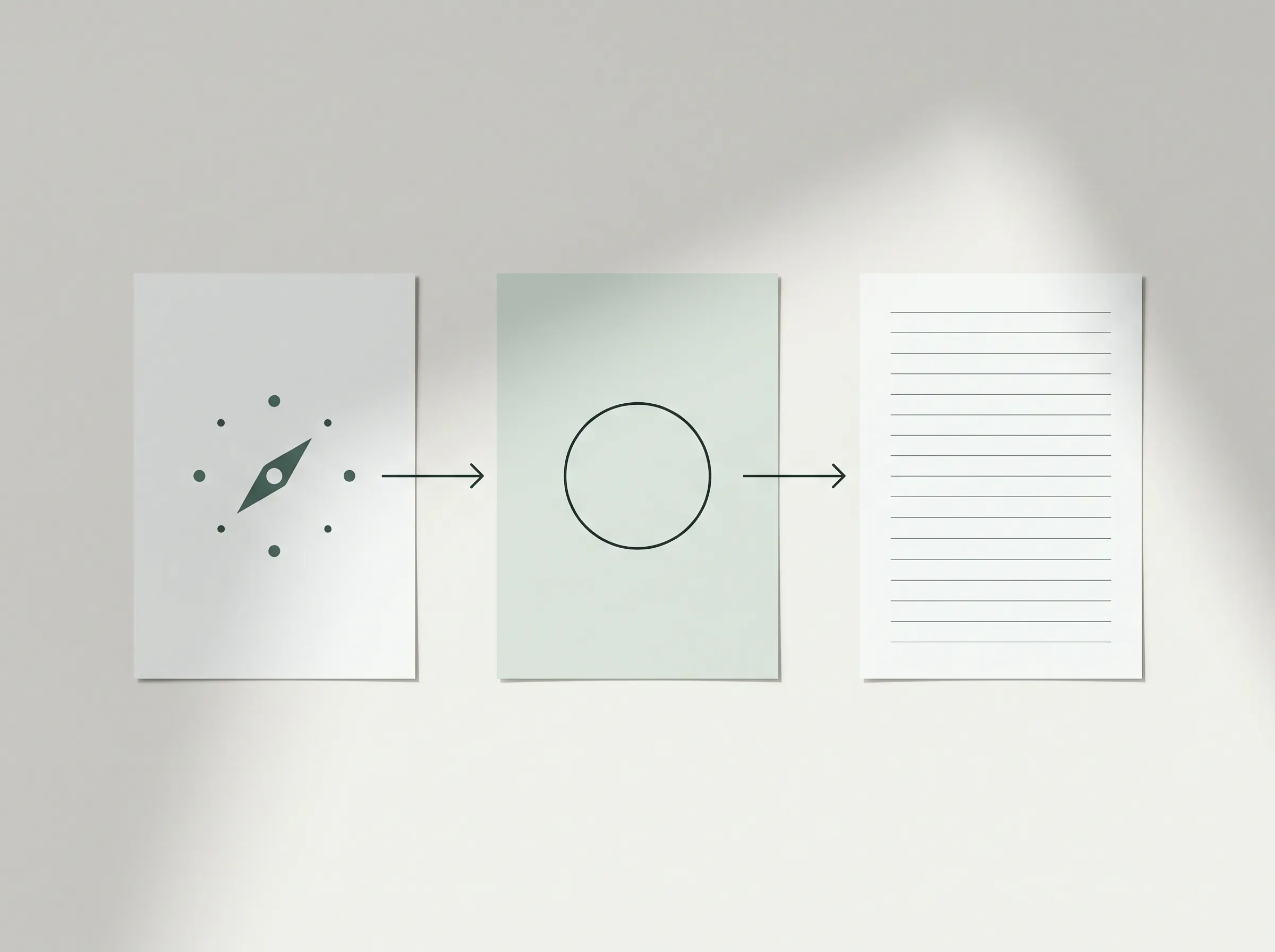
- Pick one purpose. Choose noticing, exploring, or reviewing. Avoid combining all three on one page.
- Check the language. Read each prompt aloud. Replace abstract terms with words the client already uses.
- Check the effort. Ask how much time and writing feel manageable. The client can answer one prompt or stop.
- Offer a choice. Let the client use the page, adapt it, or work without it.
For example, a coach preparing a page for a client who wants to reflect on a busy workday could use three open questions: “What moment stayed with you?”, “What did you notice in yourself?”, and “What would you like to remember next time?” This prompt set is illustrative. It has not been tested as a method, and it promises no particular result.
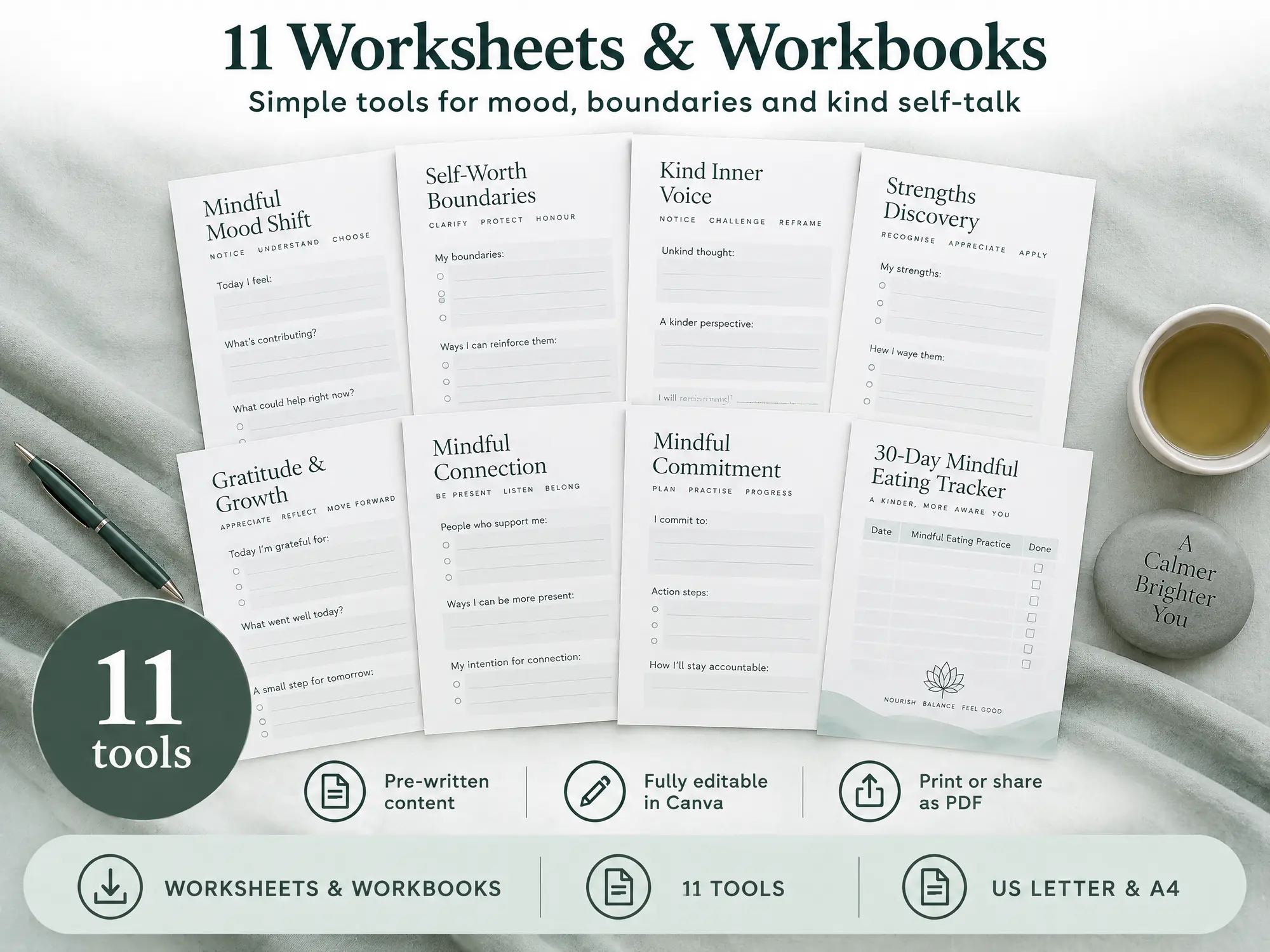
If you are selecting from a set of mindfulness worksheets and guided journals, check whether the prompts serve one clear purpose and leave room for the client's own words.
What should you check before sharing a worksheet?
Read the worksheet as if you were seeing it for the first time. Clear instructions, optional language, and enough writing space help the client understand the activity. Try the first prompt yourself to spot jargon or assumptions. This checks clarity; it does not mean you have tested the worksheet with clients.
Check these details before you share a page:
- Purpose: Can you explain in one sentence why you are offering it?
- Tone: Does the wording invite observation without telling the client how to feel?
- Choice: Can the client skip a question or stop if they do not want to continue?
- Scope: Does the page stay within your coaching agreement and training?
- Privacy: Is it clear where written responses will be stored, who can see them, and whether the client can keep the page?
- Format: Can the client read, print, or complete it in the way they prefer?
Be careful with prompts that ask for painful or highly personal detail. A general worksheet is not a substitute for clinical assessment or care. If a client raises a concern outside your role, pause the exercise and discuss an appropriate next step.
The evidence around mindfulness and writing also needs careful framing. NCCIH notes that research on meditation and mindfulness varies by practice and condition, and that safety research is limited. A systematic review of journaling interventions found varied approaches and outcomes; it does not establish that any particular coaching worksheet will help every client. Avoid presenting a page as treatment or as a guaranteed route to wellbeing.
How can you introduce it without making it homework?
Explain the invitation, the time involved, and the client's options before sharing the page. Ask whether it feels useful. If the client would rather talk, keep the conversation verbal.
You might say: “I have a short reflection page that could help us pick up this thread next time. Would you like to try it, change the prompts, or leave it for now?” That wording leaves the decision with the client.
If they choose to use it, explain when you will revisit it and what they can bring back. They do not need to complete every line. You can also agree that they will share only the parts they choose. This keeps the page connected to the coaching conversation instead of making completion the goal.
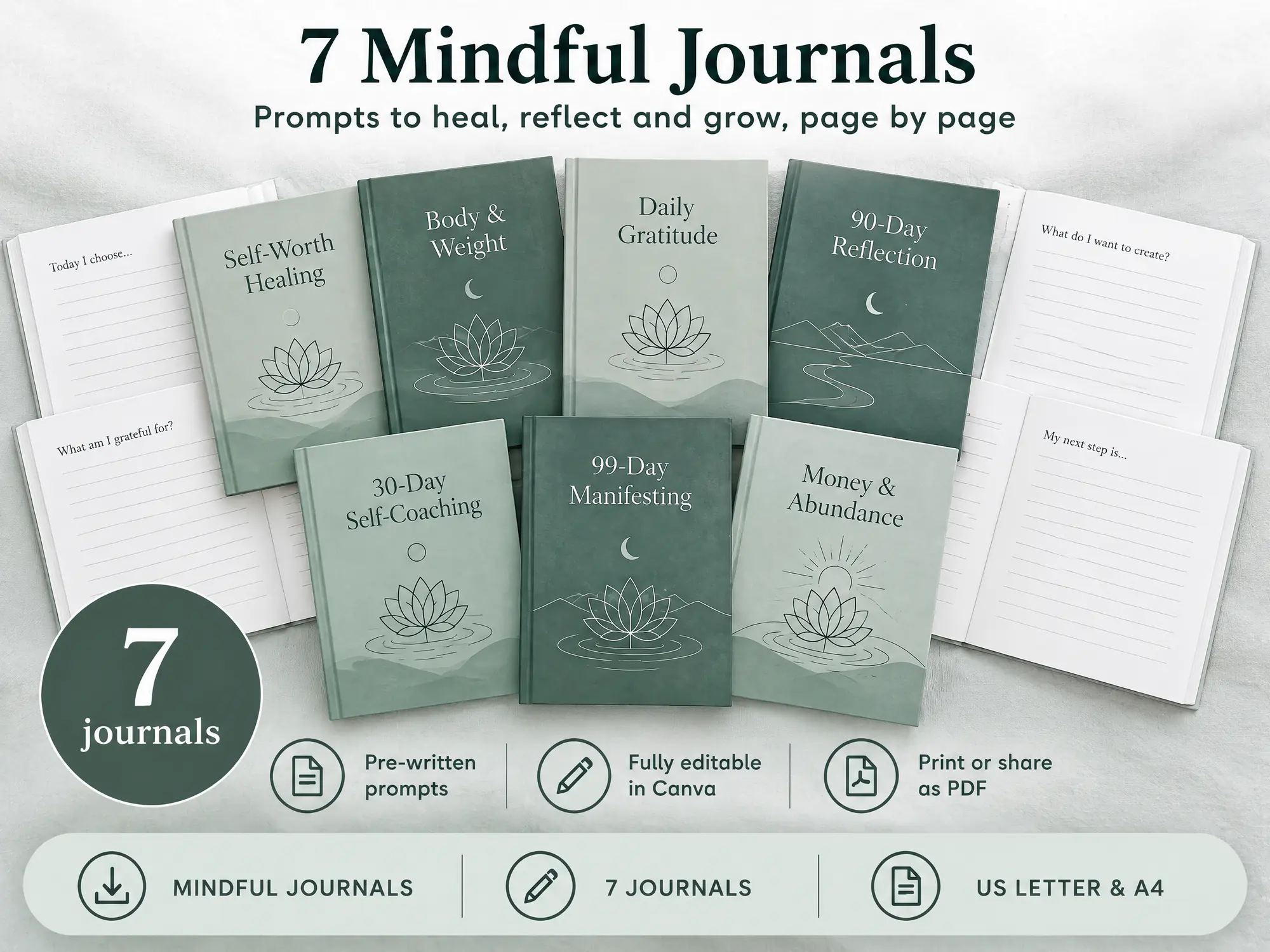
Between sessions, a simple journal or worksheet can serve as a reminder of a question the client wants to explore. The Mindfulness Coaching Kit offers guided journals and coaching worksheets that coaches can edit in Canva. Review each page first, adapt the wording to your work, and follow the product's usage terms.
How should you review the reflection together?
Let the client decide where to begin. Ask what they want you to understand, what felt useful or awkward, and whether they want to keep using the page. Their feedback can guide your next choice.
Use open questions such as:
- “Which part would you like to talk about?”
- “Was any prompt unclear or unhelpful?”
- “What would you change if we use this again?”
- “Is there anything you would prefer not to share?”
Avoid grading the response or treating a completed page as proof of progress. A client may find that a prompt did not fit. That is useful feedback about the resource, even if it leads you to set the worksheet aside.
The Substance Abuse and Mental Health Services Administration's counseling guidance recommends matching mindfulness exercises to a client's needs and whether they are likely to practice them. That guidance is written for counseling contexts, so coaches should apply it within their own role and scope. The practical point is modest: ask about fit before repeating an exercise.
Match the page to what the client wants to do. For a record they may revisit, leave room for their own words and add a date only if it helps. For conversation prep, a single question and blank space may be enough. In a session, agree whether you will read the page, discuss it, or let the client keep it private. These are format choices rather than a fixed sequence.
Where does The Mindfulness Coaching Kit fit?
The Mindfulness Coaching Kit is a set of Canva templates for mindfulness coaches. Its listed materials include mindful journals, worksheets and workbooks, an affirmation set, colouring books, and Canva and printing guides.
Those files can save a coach from designing each page from scratch. You still need to review a prompt before sharing it, decide whether it fits the client's stated goal, and explain how the client can adapt or decline the activity. The templates are resources; they do not replace your judgment, training, or any clinical support a client may need.
See The Mindfulness Coaching Kit's worksheet and journal templates if you want editable starting points for reflection between sessions. Check the current contents and terms on the site before using a template with clients.
Why Trust This Article
Cosmo Suite publishes The Mindfulness Coaching Kit and this guide, so product links here are first-party. We checked factual claims against the cited sources before publication. The site's editorial policy explains how articles are checked and corrected. You can contact the publisher if you spot an error or a source that needs another look.
Frequently Asked Questions
FAQ entries are provided in the frontmatter for the blog engine to render.
Frequently asked questions
What should a mindfulness coaching worksheet include?
A useful worksheet has one clear purpose, a short set of open prompts, enough space to answer, and a way for the client to choose what they want to discuss. The exact format depends on the coaching goal and the client's preferences.
How many questions should a mindfulness worksheet have?
There is no universal number. Start with the fewest prompts needed for the reflection you want to support. If a client needs more explanation than reflection time, simplify the page or use one prompt.
Can mindfulness coaching worksheets be used between sessions?
Yes, when the client wants to try them and the activity fits the work you have agreed to do. Explain how to use the page, invite the client to adapt or skip a prompt, and review what was useful at the next meeting.
Are mindfulness worksheets a form of therapy?
No. A worksheet is a reflection aid. It does not diagnose or treat a mental health condition. If a client needs clinical support, encourage them to contact an appropriately qualified health professional.
Should I give clients a printable or digital worksheet?
Ask what they are more likely to use. A printable page can suit handwriting or offline reflection; a digital copy can be easier to access and edit. Follow your client's privacy needs and your own data-handling policy.
How do I know if a worksheet helped?
Ask the client what they noticed, whether the prompt felt relevant, and what they would change. Treat their answer as feedback about fit, not proof that the worksheet caused a particular outcome.
Sources
- National Center for Complementary and Integrative Health, Meditation and Mindfulness: Effectiveness and Safety
- NIH, Mindfulness and Meditation
- Substance Abuse and Mental Health Services Administration, Counseling Approaches to Promote Recovery
- Efficacy of journaling in the management of mental illness: a systematic review and meta-analysis